The Problem with “Checking The Box” Safety
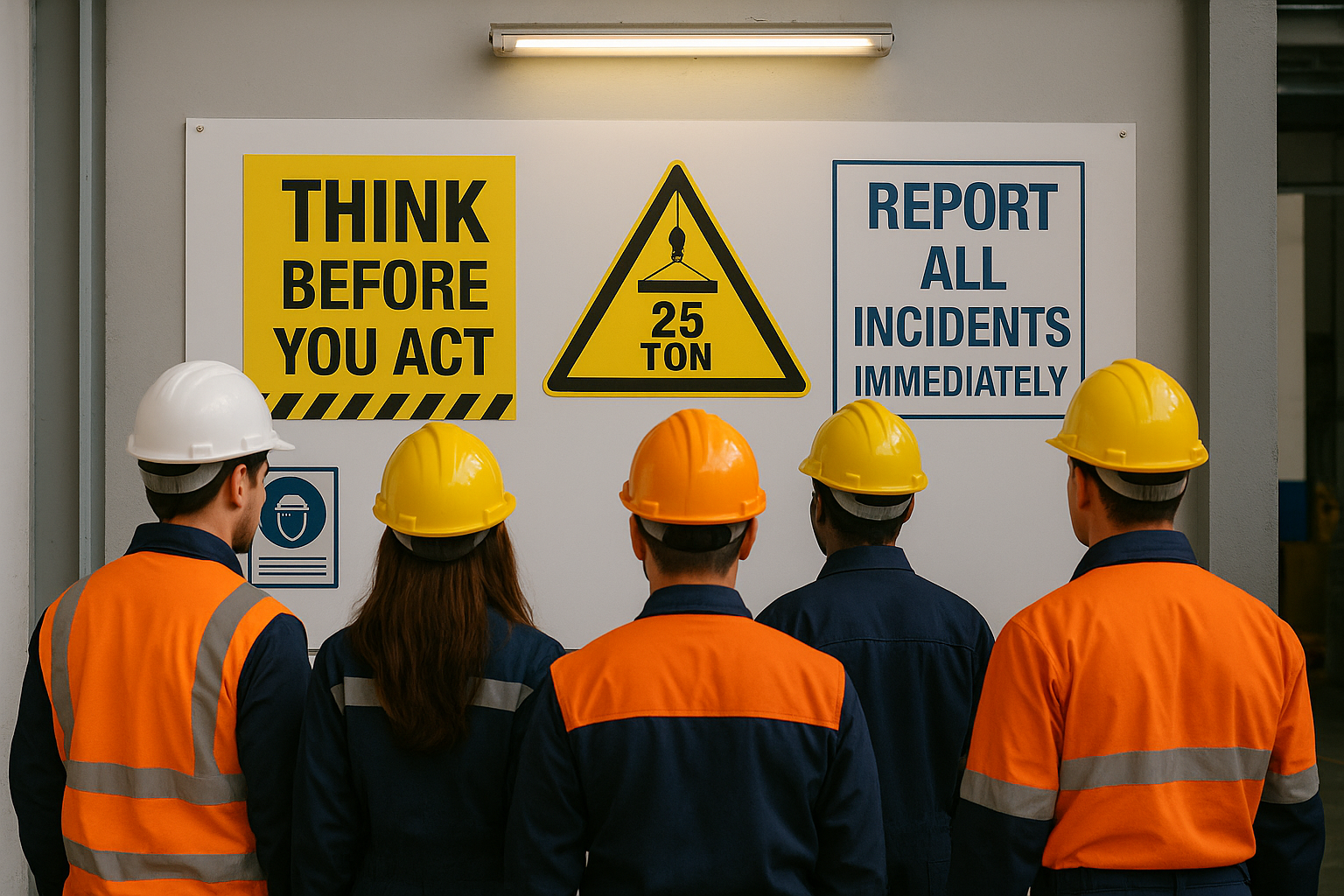
Walk into any manufacturing facility, and you’ll find the same signs: Safety First. Think Before You Act. Report All Incidents Immediately.
But let’s be honest; most employees don’t need more posters. They need purpose.
Safety that depends on supervision, checklists, or fear of discipline will only go as far as the next audit. The real challenge for leaders is not enforcing compliance, it’s inspiring commitment. The difference between the two is what separates a program that survives inspection from a culture that saves lives.
When no one’s watching, does safety still lead?
The Shift: From Program to Mindset
Culture isn’t what’s written in a handbook; it’s what people do when no one is around.
A safety mindset is built when employees act out of belief, not obligation.
Royal Caribbean’s former CEO, Richard Fain, called this the “Culture of Wow.” He defined culture as a mindset, the common set of values that drives behavior across 100,000 employees worldwide. Safety leaders can learn from this; if you want safety to thrive, it has to become part of how people see themselves, not something they’re told to do.
Compliance tells people what to do. Mindset tells them why it matters.
- Anchor Safety in Purpose
Ask yourself: Does my team know why safety matters, beyond avoiding injury or fines?
When employees connect safety to their purpose, protecting their coworkers, providing for their families, being proud of the quality they produce, it stops being a rule and starts being a value.
Example:
At shift meetings, try asking:
“Who did you keep safe yesterday?”
This reframes safety from a checklist into an act of care and accountability.
- Model It When No One’s Watching
Leaders set the invisible tone. Every shortcut, every ignored hazard, every “just this once” moment teaches people what really matters.
If you want safety ownership, model integrity when it’s inconvenient.
Show your crew that doing the right thing when no one’s watching isn’t just encouraged, it’s expected.
Practical tip:
Start every Gemba walk or floor visit by recognizing one example of someone quietly doing safety right, a small act of integrity that deserves visibility.
- Hire and Develop for Safety Fit
Skills can be taught. Mindsets are chosen.
Hiring people who already value responsibility and teamwork makes safety culture stronger before training even begins.
Interview question to try:
“Tell me about a time you saw something unsafe and how you handled it.”
You’re not looking for perfection; you’re looking for ownership.
When promotions come up, reward those who model the safety mindset. Not just the loudest voices, but the quiet consistency of people who set the tone through action.
- Make Safety Measurable and Meaningful
Transparency fuels trust.
Just like Royal Caribbean used culture dashboards, safety leaders can create visible, human-centered dashboards that track not just incidents, but participation, engagement, and ideas submitted.
When everyone can see safety performance and understands what the numbers mean, accountability becomes collective.
Tip: Add a “safety gratitude board” next to your KPIs. Pair the data with human stories; who went home safely, who spoke up, who innovated.
- Encourage Courage
Safety thrives in psychologically safe environments where employees can speak up without fear of blame.
Encourage curiosity, questions, and even constructive disagreement.
Innovation only happens when people feel safe enough to experiment.
Phrase to normalize on the floor:
“Thank you for catching that before it became an issue.”
It transforms fear into pride; the foundation of a safety mindset.
The Future of Safety Leadership
The next era of safety leadership isn’t about control; it’s about culture.
It’s not about how many policies you write, but how many people believe in what you stand for.
A true safety mindset doesn’t need to be policed; it becomes self-sustaining.
When safety is rooted in purpose, reinforced by transparency, and modeled through leadership, it thrives in every corner of the workplace, even when no one’s watching.
Reflection Prompt for Leaders
Ask yourself:
- Do my employees act safely because they have to or because they want to?
- What daily actions of mine teach them which one I value more?
The answer will tell you exactly where your safety culture stands.
Call to Action:
If you found this helpful, share it with a fellow safety leader or supervisor.
Let’s redefine what safety leadership looks like, one mindset at a time.
